Musings
THE STATE OF THE LGBTQ+ COMMUNITY IN INDIA
Previously published in Outlook.
Recently, an ad for a fairness cream which showed a couple fasting on Karwa Chauth was taken down after strong protests. If you thought that people were protesting because they found fairness creams or even Karwa Chauth regressive, you would be wrong. The reason that the ad was so objectionable, so offensive, was that it featured a lesbian couple fasting for each other on Karva Chauth. It was seen as an assault on our “ancient” culture, our glorious tradition.
But was homosexuality alien to the Indian experience? No. In the Mahabharata, a warrior in the Kurukshetra War was born a girl, but later transitioned into a man named Shikandi. Agni, the God of Fire, was married to both Svaha (a Goddess) and Soma (a God).
Homosexual and LGBTQ+ themes have been written about in ancient mythology and depicted in the designs of historical monuments for centuries. It has always been a part of India’s history. So why can’t we accept it even now?
Queerness may have been part of our mythology but homosexuality used to be considered a crime punishable by torture – their hair used to be shaved off, their fingers removed, their caste revoked. In parts of India, it was even worse – girls and women were subjected to “corrective rape” as a “cure” for being lesbians, which was prescribed by pandits, and often even their own family members.
In the late 1800s, certain sexual activities were criminalized. These included non-consensual relationships, paedophilic relationships, and (surprise, surprise!) LGBTQ+ relationships as well.
It was only in September 2018 that being gay became legal once more. But legalisation is far from acceptance.
Studies show that even in a current urban India, one of the major factors of stigmatisation of homosexuality is the reaction from one’s own family members. In many families, members of the LGBTQ+ community are only accepted if they agree to “behave like heterosexuals”.
Even if they try to be accepting, parents treat questions or discussions about homosexuality as a hush-hush topic – something that children under a certain age are, in their opinion, too young to know about or understand. But why is someone too young to understand homosexual relationships but old enough to understand heterosexual ones?
Trans people don’t have it any better. Some doctors refuse to treat trans men and women, fearing that they might get “infected” with what they consider a disease. Vyjayanti Vasanta Mogli, an Indian trans woman, has spoken about her experience after coming out. She was forced by her family to undergo “corrective therapy” in a psychiatric hospital, which she described as somewhat like a prison with high walls and electric fences where she was treated as a criminal.
The lack of support from one’s family comes as a huge blow, especially since we live in a society with a rigid social structure. You might have heard of the phrase “blood is thicker than water”. What you might not know is that the complete phrase is in fact “blood of the covenant is thicker than the water of the womb”, meaning that bonds forged by choice are so much stronger than the ones you are born with. You can make your own family that accepts you for who you are.
While the legalisation of the LGBTQ+ community is certainly a step towards acceptance, we still have a long way to go. If you know someone who is a member of the LGBTQ+ community, please try to make them feel accepted. You never know how far some kind words can go.
Dune
No one was more excited to watch the film adaptation of ‘Dune’ by Frank Herbert than my father was. He had forced me to read the book before there was even any vague concept of a new movie being made, and I guess I should listen to his advice more often, because ‘Dune’ is one of the best science-fiction books ever to be written.
If I’m being honest, when I first heard about the upcoming film, I was a little skeptical. People have always considered ‘Dune’ to be somewhat… unfilmable. There are so many fantastical elements and characters and creations that I thought would only be possible to envision in my mind, and the 1984 movie adaptation by David Lynch only proved this belief (Spoiler alert: it was a disaster). So, I was pleasantly surprised when the ‘Dune’ movie, directed by Denis Villeneuve, managed to recreate everything almost to perfection. The experience of watching it was immersive in a sense, something that the 1984 film couldn’t achieve.
With its star-studded cast (Timothee Chalamet, Zendaya, Jason Momoa, and Josh Brolin among others), this movie was destined to be a box-office hit, and sure enough, it earned over $40 million in the opening weekend itself.
Timothee Chalamet was perfectly cast as Paul Atreides, a royal heir who is speculated to be the ‘Kwisatz Haderach’, which is something of a superbeing in the world of ‘Dune’.
The movie sounds great, right? But here’s the catch – you will not enjoy this movie until you have read Frank Herbet’s book first. Although the movie tried to keep the made-up languages of Arrakis and Caladan, there’s a high chance that the film will make zero sense to you unless you read the book first. I loved watching it, so did my father (although he was a bit disappointed), but my sister, who has never read the book, had a confused look on her face the whole time.
In my opinion, the ‘Dune’ film adaptation was incredibly well-made, but it was incomplete. They appeared to have expected their entire audience to have read the book, and did not spend enough time introducing the characters, or giving a background to the story. The story itself felt somewhat rudimentary – the film did not manage to capture even one-fourth of the book’s intricate plot.
My suggestion is to either read Frank Herbert’s ‘Dune’ before watching it – or watch Denis Villeneuve’s adaptation for its art rather than the story.
The Styles of Harry
When you hear the name ‘Harry Styles’, you immediately think of One Direction, one of the most popular boy-bands in the world. People often underestimate his music, assuming it to be the same teenage pop music that One Direction was making, but, surprisingly, Harry Styles went in a completely different direction. With elements of Fleetwood Mac, The Beatles, Simon and Garfunkel, The Rolling Stones, and even a hint of Pink Floyd, he has made a dramatic change in his musical style from pure pop to a mixture of soft rock and indie.
Although his most popular songs are ones like ‘Watermelon Sugar’ and ‘Adore You’, I prefer listening to ‘She’, ‘Sweet Creature’, and ‘Two Ghosts’. The song ‘Sweet Creature’ is distinctly Beatle-esque, and the opening finger-picked guitar riff is not unlike the one in the Beatles’ song ‘Blackbird’.
BLACKPINK IN YOUR AREA!
Blackpink, a South-Korean girl group consisting of Park Chaeyoung, Lalisa Manoban, Kim Jennie and Kim Jisoo, took the world by storm in 2016. I was first introduced to K-pop by a friend of mine a few years ago, and… I didn’t like it. I had a mental block against K-pop, so I did not even try to listen to any songs – that is, until I heard ‘Kill This Love’ by Blackpink. The song is unabashedly pure pop, but the tune and the synth beats were stuck in my head for weeks! I found myself playing it on repeat, and even though I didn’t understand the Korean lyrics, it didn’t stop me from singing pure gibberish in the tune of the song. Eventually, I started to listen to more songs, and I realised that all of them were just as catchy and fun to listen to. I now can call myself a ‘Blink’ (a Blackpink fan), having listened to almost all their music.
Blackpink is now one of the most popular groups in the world, being the most-subscribed group on YouTube, with two songs with over a billion views. One of their latest songs, ‘How You Like That’, received 80 million views within a day – making it the most viewed video ever within 24 hours. They were the first Korean girl group to chart in the Billboard Top 100, and their albums have broken multiple Guinness World Records. At this point, it would be easier to list the records that they haven’t yet broken! Perhaps their iconic slogan – ‘Blackpink is the Revolution’ – really is true!
“That Rock ‘n’ Roll, Eh?”
My uncle recently introduced me to the Arctic Monkeys, and I am not afraid to say that I loved them immediately. Their music is is a mixture of R&B, Garage Rock, and Indie Rock, with elements of David Bowie, Black Sabbath, the Beatles and the Rolling Stones; at the same time remaining unique. The Arctic Monkeys, formed by Alex Turner, Matt Helders, Nick ‘O’ Malley and Jamie Cook, are possibly one of the only rock bands formed in the late 2000s, and still playing today. Some of my favourite tracks by them include ‘Four out of Five’, ‘Mardy Bum’ and ‘Snap Out Of It’, but my most favourite songs by far are ‘R U Mine’, and ‘Do I Wanna Know’. When I first heard ‘Do I Wanna Know’, my fingers were itching to learn it on the guitar for days… and when I finally learnt it, I couldn’t stop playing it! The guitar riff is catchy and cool, and is sure to get stuck in your head for weeks.
So, I have decided to share with you, my guitar covers of “R U Mine” and ‘Do I Wanna Know’. As Alex Turner himself once said, “That rock ‘n’ roll, eh? That rock ‘n’ roll, it just won’t go away. It seems like it’s faded away sometimes, but it will never die. And there’s nothing you can do about it.”
“Music is the emotional life of most people.” – Leonard Cohen
One of my favourite things in the world is music, so I thought I’d share a cover of ‘Hallelujah’ by Leonard Cohen, that I played on the piano. When I’m not reading, I love to potter about on the piano or guitar, so watch this space for more covers soon!
A LETTER FROM THE FUTURE
Dear me,
I will not ask you how you are for I already know that you live in a dystopian world where the interactions with fellow human beings are limited to the virtual world, bits of paper have more currency than love and the air is thick with smoke and disease.
I write to you from a future that is different and better. You might not realise it now, but you inhabit the cusp to the new world, brought on by what we refer to in 2030 as the ‘Covid Scare’. A disease that locked us away in our homes unlocked our hearts and minds. We realised that all the money in the world couldn’t save us, unless we took the time to invest in each human being rather than share markets. It is because of this experience that the ideal world as it is now, in the year 2030 is one of respect, tolerance and equality.
In my world the difference between black, brown, yellow and white is restricted to the paint palette alone and we celebrate the myriad colours we live among. We love who our hearts choose regardless of the gender and everyone celebrates that love.
Environment is the new religion as it was even many years before your present time. We know that to live in harmony with mother nature is the only prayer we need. Communal conflict has been replaced by hope and love and people find spirituality inside their own beings and not in temples, churches and mosques.
Remember how you were told to pick history over science because you were a girl? Well, the cure for COVID-19 was developed by a young woman in Delhi. Nobody in this time would even dream of making a distinction based on gender.
We aren’t affluent in monetary terms. Everyone has as much as they need, no more and no less. Life is simple. We grow our own food and share what we grow with our neighbours. We are rich in so many other ways. We are rich in the relationships we have with those around us. We are rich with what we imbibe from art and music and books.
Before it got better, however, it got worse. The police, the so-called ‘protectors’ of the people, murdered their fellow humans in cold blood, just because they were of a different race or culture. The criminal was considered the victim, the victim the criminal. Atrocious crimes against both humans and animals were applauded rather than condemned, and peaceful protestors were arrested instead of real criminals.
You might think that ten years is too little a time to change a bloodthirsty hell into the Shangri-La I claim to live in, but It did happen, though, it wasn’t easy.
Years of death, destruction, and disease caused us humans to finally see the light. People started to speak up. Men, women, children of every religion, took to the streets to protest against those in power, and although these protests were often crushed by the authorities, in the end the people’s will prevailed. Authoritarian governments across the world fell.
What once divided us brought us together, as Audre Lorde said, “It is not our differences that divide us. It is our inability to recognise, accept, and celebrate those differences”.
We’ve learnt to be happy with less, and instead of wasting our time trying to impress people on social media, we have ushered in an age of science, literature, art, and music, but despite the excellence around us, parents no longer pressure their children into being A+ students or prodigies
I am not a world-famous celebrity or the CEO of some big company. I’m just a forensic scientist. I walk to work everyday, and use the same laptop you use now. It might not seem like an ideal world to you, but trust me, it will. I should know, I’m you.
_____________________________________________________________________________________________________
These are some songs that I recommend which have been released recently. I have also been listening to a lot of old music lately, and I will come up with a list of old songs for you soon!
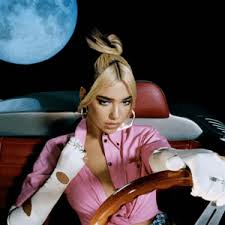
- Album: Future Nostalgia by Dua Lipa
1.Don’t Start Now
2. Break My Heart
3. Levitating
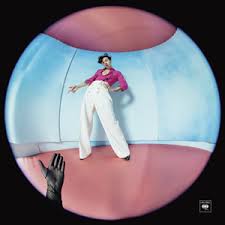
- Album: Fine Line by Harry Styles
1.Watermelon Sugar
2. Adore You
3. Cherry
4. Falling
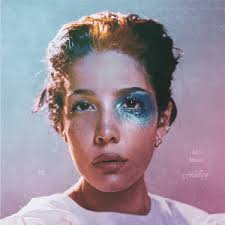
- Album: Manic by Halsey
1.Graveyard
2. Clementine
3. More
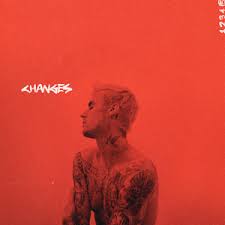
- Album: Changes by Justin Bieber
1.Yummy
2. Changes
3. Intentions

- Album: Heartbreak Weather by Niall Horan
1.Heartbreak Weather
2. Nice To Meet Ya
3. No Judgement
4. Put a Little Love on Me
5. Black and White

- Album: Rare by Selena Gomez
1.Rare
2. Ring
3. Look At Her Now

- Song: Stuck With U by Ariana Grande and Justin Bieber

- Song: Six Feet Apart by Alec Benjamin

- Song: No Time To Die by Billie Eilish
 De Omnibus Dubitandum